
Live Streamed Services
Archive
- December 2025
- November 2025
- October 2025
- September 2025
- August 2025
- July 2025
- June 2025
- May 2025
- April 2025
- March 2025
- February 2025
- January 2025
- December 2024
- November 2024
- October 2024
- September 2024
- August 2024
- July 2024
- June 2024
- May 2024
- April 2024
- March 2024
- February 2024
- January 2024
- December 2023
- November 2023
- October 2023
- September 2023
- August 2023
- July 2023
- June 2023
- May 2023
- April 2023
- March 2023
- February 2023
- January 2023
- December 2022
- November 2022
- October 2022
- September 2022
- August 2022
- July 2022
- June 2022
- May 2022
- April 2022
- March 2022
- February 2022
- January 2022
- December 2021
- November 2021
- October 2021
- September 2021
- August 2021
- July 2021
- June 2021
- May 2021
- April 2021
- March 2021
- February 2021
- January 2021
- December 2020
- November 2020
- October 2020
- September 2020
- August 2020
- July 2020
- June 2020
- May 2020
- April 2020
- March 2020
- January 2020
- December 2019
- November 2019
- September 2019
- August 2019
- July 2019
- May 2019
- April 2019
- March 2019
- February 2019
- January 2019
- December 2018
- November 2018
- October 2018
- September 2018
- August 2018
- July 2018
- June 2018
- May 2018
- April 2018
- March 2018
- February 2018
- January 2018
- December 2017
- November 2017
Archbishop Johnson's Homily for All Saints' Day
In the next few days we will see (we hope!) the results in one of the most polarised elections in American history; angry, bitter, tendentious, shocking. The mood of the country is electric, as it is in the rest of the world, and we hold our breath.
The US elections, though, are only a sign of an increasing pattern in our world: deep and alienating polarisation that favours hard boundaries and stark differences over welcoming a spectrum of opinion and recognising mutual interests even in the face of diversity. We have witnessed increasingly shrill voices dominating conversations – indeed these are not conversations or even debates, but tribal sloganeering and propaganda – the divisions so entrenched that there is no recognisable common ground for civil discourse, moderate voices are silenced, the “other” is demonised and anathematised. There are only two factions: us or them; the righteous or the unrighteous; our truth or their lies. If “they” win, we “lose” everything. Those who work across those divisions, who work for mutual understanding, for reconciliation, are often branded as traitorous by the holders of the pure and undefiled truth. Alternative narratives must be excluded because diversity is deemed a threat. It is the politics of anger and the underlying fear that drives it.
The church is not immune. The fractures that threaten the life of our Anglican Communion over equal marriage, for instance, are only the most current manifestation of a neat and structured polarity that tries to define those who are “in” and acceptable, and those who are “out” and impure. Such forces have marred our life as Christians from the very beginning of the Church. “See how these Christians love one another” was not meant to be sarcastic!
The Feast of All Saints could easily be used to support that model – a celebration of the virtuous ones who have triumphed, the good over the evil, the saint over the sinner.
But if we allow that interpretation, we have missed the point of this day. It stands as a correction of such simple tribal dichotomies and a quiet counter-narrative challenging what is being wrought in our world.
Both St. John and St. Paul write that “all have sinned and fallen short of the glory of God” and “If we say we have no sin, the truth is not in us and we are liars.” Yet in writing to his fledgling local churches, St. Paul also insists on addressing his letters “to all the saints”– the ordinary people of God he has also called sinners. They are saints, too. In their conflicts and in their charity, in their doubts and in their hope, they are cherished by God.
I am not sure what you think of so-called “cancel culture” where statues of the famous, now infamous, have recently been torn down, or the names of buildings and streets rebranded because of historic offenses. I suspect there are varying sympathies in this parish to this that depend on the very different experiences that shape our perspectives. We need to listen carefully and openly to each other to discover from each other what we have yet to learn and unlearn, embrace and discard.
So when we come to All Saints Day, we need to be clear: There are no saints enrolled in the church’s calendar who are perfect, who are without shortcomings – sometimes quite grievous ones.
So do we pull down all our statues? Do we strike out of remembrance those we have revered when we discover their clay feet?
Or perhaps do we give up our call to aspire to a holy life as hopeless because we, like them, will surely fail?
I wonder if the point of All Saints is to remind us that the Christian life is dynamic – a determination in God’s grace to grow toward the life of virtue to which we are called – slow and stumbling as that growth might be, marked with plateaux and chasms as well as mountain top vistas. God is entirely capable of taking the ordinary stuff of our lives and transforming them by Christ’s redeeming work into vessels - vectors, more dynamically, of his glory.
I wonder if the point of All Saints is to remind us, modelled on the lives of the Saints, to trust ourselves, to the healing, reconciling, transfiguring power of God’s love that works deep within us to redeem us. Not only forming us into full maturity as an individual followers of Jesus but drawing us ever more deeply into relationship with others. And it is a vast company of which we are part, a company of God’s choosing not ours, which no one can number, of all races, tribes, nations and peoples united and gathered in a banquet where all find a place and all are fed. Oh dear! We are given a place at the table in the Kingdom by God’s invitation not our merit, and with those who might have viewed as “other”.
I wonder if the point of All Saints is about reclaiming the victory of that love and creative power over division and discord, over fear and hatred, over sin and death, so that we can proclaim with Paul, “I am persuaded that neither life, nor death, nor angels, nor principalities, nor powers, nor height, not depth, nor things present, nor things to come, nothing in all creation will be able to separate us from the love of God which is in Christ Jesus our Lord.” (Romans 8)
I wonder if All Saints might stir us to the cultivation of daily habits of thought and action – those habits of the heart and mind and body that we promise with God’s grace to practise when we make our baptismal vows: prayer, study, corporate worship, repentance, engagement with neighbour, care for creation, fostering a disposition of awe and wonder toward the world we encounter, so that slowly, in company with one another on the journey, we, too, are transformed into saints.
At the back of this church is a quote from Dom Gregory Dix’s magisterial treatise, The Shape of the Liturgy. The book is dated and recent scholarship has developed new understandings but there is deep truth at the heart of his text. Immediately following on that the quotation, he writes this:
“To those who know a little of Christian history probably the most moving of all reflections it brings is not the thought of the great events and the well-remembered saints, but of those innumerable millions of entirely obscure faithful men and women, every one with his or her own individual hopes and fears and joys and sorrows and loves – and sins and temptations and prayers ...They have left no slightest trace in this world, not even a name, but have passed to God utterly forgotten by men. Yet each once believed and prayed as I believe and pray, and found it hard and grew slack and sinned and repented and fell again. Each of them worshipped at the eucharist and found their thoughts wandering and tried again, and felt heavy and unresponsive and yet knew [God’s love]. There is a little ill-spelled ill-carved rustic epitaph of the fourth century from Asia Minor: “Here sleeps the blessed Chione, who has found Jerusalem for she prayed much’. Not another word is known of Chione... But how lovely if all that should survive after sixteen centuries were that one had prayed much, so that the neighbours who saw all one’s life were sure one must have found Jerusalem.” (The Shape of the Liturgy, pp. 744f.)
All Saints.
It is not by specific, individual name or extraordinary deed that we set apart All Saints for memorial but the ordinary, everyday, run-of-the -mill, still slightly flawed saints, the holy people of God, and yes including the ones sitting beside you or watching on another screen – whom we remember with thanksgiving and joy today – and we give thanks for them even as we make our commitment to be numbered in their blessed company.
Amen.
Homily, All Saints’, November 1, 2020
Church of St Mary Magdalene, Toronto
The Most Rev’d Colin R. Johnson

All Souls' Day - 2 November 2020
We celebrate All Souls’ Day with a requiem mass in remembrance of those who have gone before us.
Archbishop Johnson celebrates, and Mother Johanna preaches.
Particular thanks to Jennifer McCallum for giving of her time and talent to sing Pie Jesu, by Lili Boulanger, at the Prayers of the People.
You can join us HERE.
You can find the leaflet HERE.
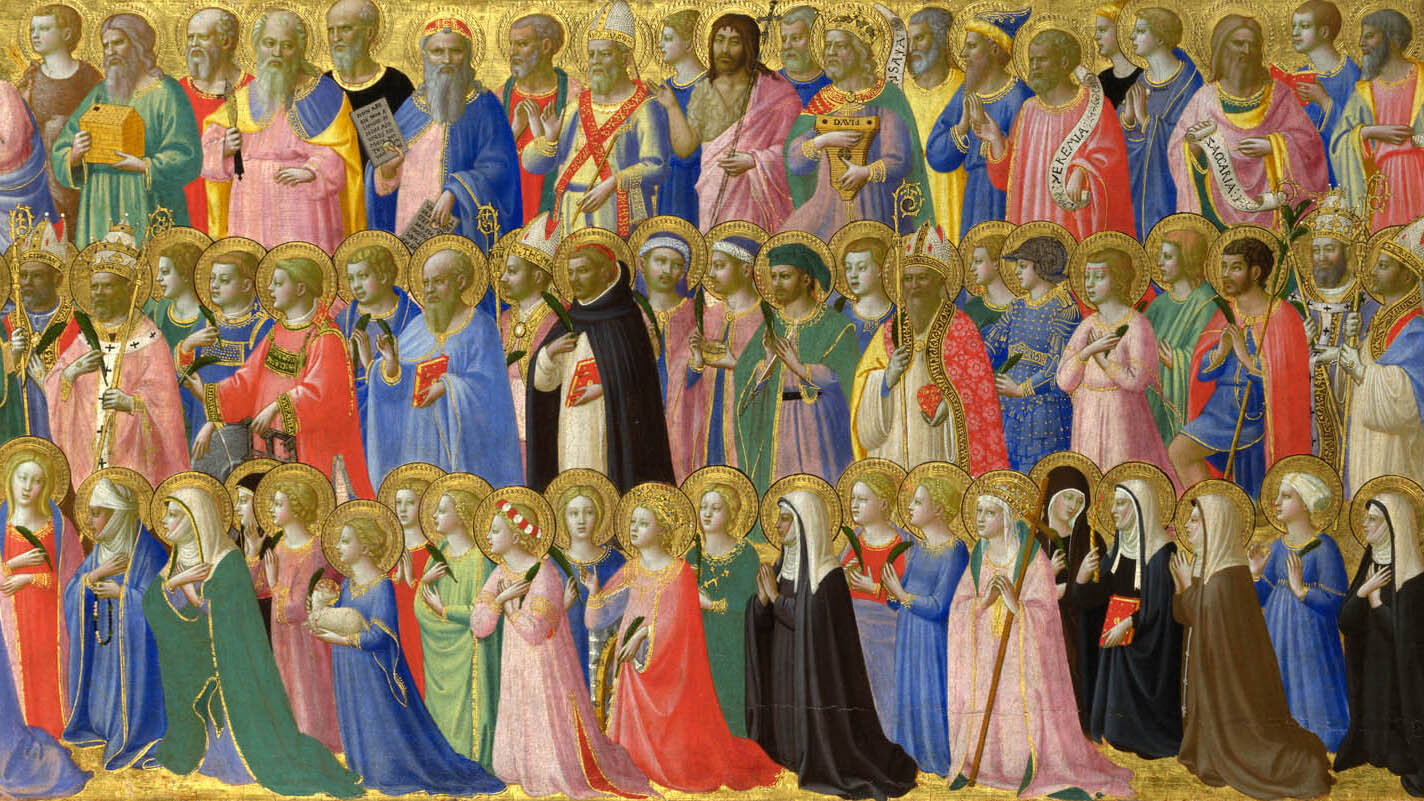
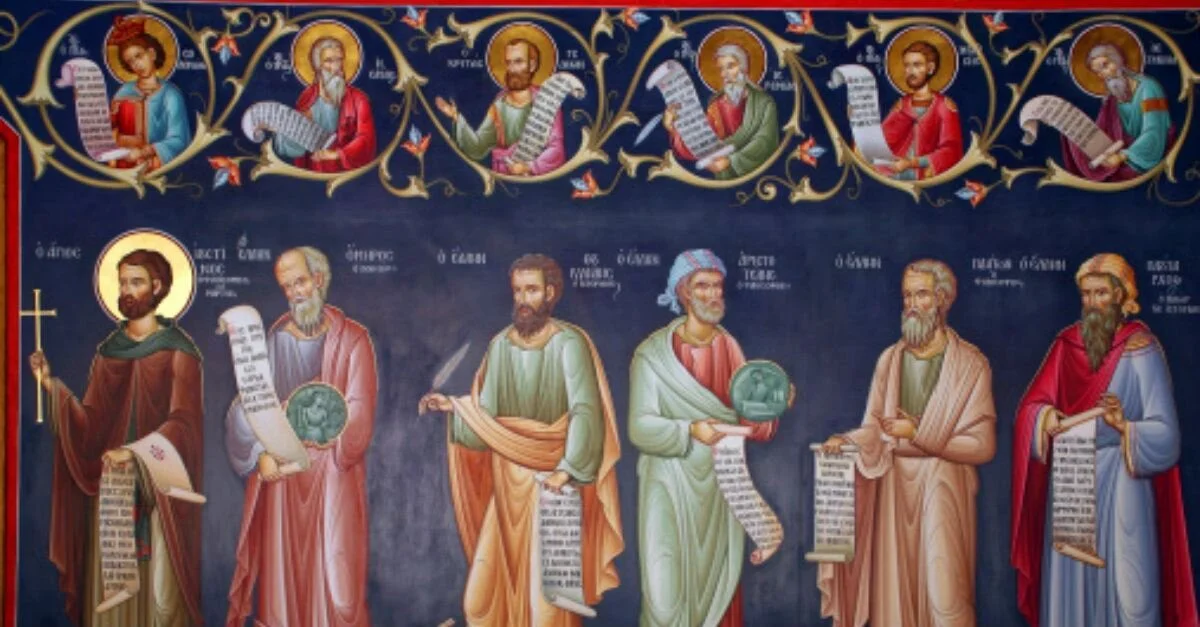
All Saints & All Souls for Children & Youth
Mother Johanna (who has a tail?!) explains why we celebrate the saints and pray for those who have died.
Archibishop Johnson's Homily on the Death of Moses
Homily on the Death of Moses, Deuteronomy 34: 1-12
SMM, October 24-25, 2020 (Pentecost XXI, year A)
The Most Rev’d Colin R. Johnson
There is a true story of one of our chaplains at an Anglican Independent School who was in a quandary. A member of the Royal Family was coming to the chapel for a special service and was to read the Psalm, except that the Psalm appointed for the day was rather unfortunate in the circumstances: It included the line: “Put no trust in princes.” The chaplain phoned the Area Bishop for advice and he asked, “What is said at the end of readings?” “The word of the Lord,” replied the chaplain. “Well,” said the bishop, “Is it or isn’t it?” And the Psalm was read as appointed. Afterwards the royal prince commented to the chaplain, “An interesting reading, I say – who made that choice?” The chaplain replied without batting an eyelid, “I believe it was a liturgical commission appointed by your mother.”
I am certain that the framers of the lectionary did not have us at SMM in mind decades ago when they appointed Deuteronomy 34 as our first reading for today.
The story of the death of Moses some 3200 years ago and the transition of leadership at a pivotal point of new crisis for the People of Israel, was not written with the difficult changes in leadership in this parish in view, nor the upcoming move of our Area Bishop, Jennie Andison, to take up a new parish appointment as rector, nor even the spectacle of the fraught election now underway with our American neighbours.
This story is not an allegory. There is no neat one-to-one mapping of current names or events unto ancient characters.
But it is the word of God. In dialogue with the text, both in its historical context and in conversation with our present situation, what might we hear of the Word of God addressed to us today?
In this story there are real elements of tragedy and unfairness. Moses is a magnificent figure. Born into slavery and slated for a genocidal death as an infant by a frightened Pharaoh, he is improbably raised as a prince in Pharaoh’s own household. In an act in response to injustice and in reclaiming his own heritage, he kills an Egyptian persecuting a Hebrew, and then runs for his life. He makes a new life for himself in the wilds of the Sinai, employed as a shepherd by his father-in-law, a priest of a foreign god.
And then, out of the blue – or actually, out of a burning bush! – Moses is called by the living God to serve God’s people. Moses protests his inadequacy, his disability, his lack of credibility with anybody. God calls anyway and promises to be with Moses step-by-step. And Moses listens and obeys – and, step-by-step, God is with Moses and provides what is needed.
We know the story of the Exodus – it is the foundational event of the Jewish-Christian identity – in Matthew’s account of the Gospel, the Exodus is recapitulated in the life of Jesus, who is the new Moses, the law-giver and law-fulfiller.
Moses, the great leader, is tasked to bring the People of Israel against all odds out of Egypt into the Promised Land – the land promised by God to the ancestors – Abraham, Isaac and Jacob and their progeny forever – a land lost for generations during their captivity in Egypt and now about to be reclaimed.
Moses did not have an easy time in leadership: disputes, challenges to the vision, learning to delegate, impatience, missteps and wrong turns, rebellion, idolatry, a yearning for what they knew (even if it was a life of slavery, you at least knew what to expect!), hunger, thirst, disappointments, deaths. And the big question just lying under the surface: was God even there? Through it all, Moses knew God was there – “Moses was seen by God face-to-face.” And God provided: vision, courage, direction, manna, water and above all, a new community – a chosen race, a royal priesthood, a holy nation, God’s own people, in the language of last week’s lessons. [I Peter 2]
The thing was, it was not Moses who was leading. God, Yahweh, was leading God’s people, to the Land of his Promise, working in tandem with his servant Moses and with all of the people. God was in charge.
And at one point, Moses forgot that.
A political scientist commenting on this text said that Moses became comfortable in his role and began to act as if he possessed independent power and judgement that could be exercised at his own discretion apart from Yahweh’s direction. [Timothy Simpson, “The politics of being replaced – Deuteronomy 34: 1-12”] That is the ultimate act of idolatry: replacing God.
Moses quickly repented but the harm was done and the consequences remained. So Moses’ vocation was only partially fulfilled in his lifetime. He was given the gift to see the Promised Land – perhaps not only as it was but as it would be. He stood on the mountain top and glimpsed the glory. But he himself could not go in.
Tragic as it appears, and it is, this is not recounted as a tragic tale in the scriptures. Moses is not angry or defiant on the mountain top. He does not rail at injustice. He spends his last days preparing the people for what is to come and reminding them of their core identity that will carry them forward if they so choose. They are to love God with all their heart, mind, soul and strength. They are to put nothing other in place of God. And if they do obey they will be choosing life. He urges them: choose life! He dies (the text says) at the command of God, still full of vigor and vision even in old age. The text implies that God buries him, the grave unmarked and unknown. Moses does not need a monument for people to keep coming back to in order to keep his memory – his monument is the life of the People of God whom he was incredibly, unexpectedly privileged, under God, to tend and challenge and nurse. His monument is not their past but their future – what they will become. His eulogy is full of praise for what he has done, not of regret for what could not be.
The people truly mourn Moses’ death but they have not yet completed their vocation. There comes a time for the journey to continue. As central as Moses has been, the flourishing of the People of Israel does not ultimately depend on him. There is a new challenge ahead that calls forth new leadership under Yahweh’s continued direction: Joshua is raised up the lead. There is work to do, a land to be won, a destiny to be fulfilled. Their hope does not lie in any one person no matter how crucial that person was at a particular stage. Hope rests in the One who alone can do what Moses cannot.
More than 1000 years later, when Jesus is asked, in an adversarial debate meant to set him up, what is the most important thing, the greatest of the laws, he responds with words from the law given to Moses – “Love the Lord you God with all your heart, and all your mind, and all your soul, and all your strength”. And he adds a second like it, also from the Mosaic Torah, “Love your neighbour as yourself.”
“Never since has there arisen a prophet in Israel like Moses whom the Lord knew face-to-face.” What an acclamation!
Never that is until Christ. “Jesus Christ does not know the Lord face-to-face; Christ is the Lord’s face, God’s very presence, who shows the world God’s will. “The word was made flesh and dwelt among us..and we beheld his glory, the glory of the only begotten son full of grace and truth.” (John 1) In Christ, God gives the world God's word, and that word is life, even in the face of death. God remains true to God's "Word"! This is the reality of God's character and the good news that enables us to discover hope and new life in the midst of our many questions.”
[see Feasting on the Word: Preaching the Revised Common Lectionary - Feasting on the Word – Year A, Volume 4: Season After Pentecost 2 (Propers 17-Reign of Christ).]
Jesus or in Hebrew, Jeshua or Joshua.
George Appleton, former Anglican Bishop of Jerusalem, framed this as a prayer that speaks to the heart of the issue that Moses knew, and forgot and then learned again, even as we do:
O God, I know that if I do not love thee with all my heart, with all my mind, with all my soul and with all my strength, I shall love something else with all my heart and mind and soul and strength. Grant that putting thee first in all my loving I may be liberated from all lesser loves and loyalties, and have thee as my first love, my chiefest good, and my final joy. Amen. ~ George Appleton, Oxford Book of Prayer”
Moses did not have extraordinary personal gifts. He was often in over his head. He was uncertain. He was distraught at times. He wanted to give up. He had to learn to share power. He over reached himself. He repented and carried on. He learned the hard task of obedience and found life in the road of service to a bigger cause. He knew that the kingdom of God is a work in progress and he was just one contributor to it. He knew that the ongoing life of the community as they moved forward in faith and hope was more important than any one person. He learned again and again, that the mission was God’s not his. He did not have to carry it. God was always there. Even as he died, he had found himself liberated from lesser loves and loyalties and claimed God as “his first love, his chiefest good and his final joy.”
He is counted among the blessed.
Is there word of God for us?
“O God… Grant that putting thee first in all our loving we may be liberated from all lesser loves and loyalties, and have thee as our first love, our chiefest good, and our final joy.
God calls us through our baptism into Jesus Christ to join in building God’s kingdom on earth as it is in heaven. We are brought not alone but into a community of faith that seeks to love God and all that God loves. We are nurtured together through word and sacrament, bread for the journey, a communal foretaste of the kingdom for which we work and yearn. Each of us has an essential and unique, collaborative part in its creation.
But only a part. It’s God’s project. We are not the creator or finisher but co-workers. We do what we can, not what we can’t. New circumstances draw out new gifts. We find ourselves stretched out our comfort zones. We do the work, even if we cannot see immediate results or get easy gratification. The Exodus journey, after all, was never easy and often seemed futile – the Promised Land just a pipe dream. Forty years in the wilderness is brutal!
Yet hope prevails: hope in the One in whom all our hope is founded. Hope in the One who remains constant, faithful and steadfast. Like primary teachers working with their young students, or parish priests with their parishioners, or parents with their kids, or the elderly with those they mentor, we know that even if we ourselves don’t see the fruition of our labour - of the project - of the mission - in our own time, we have joined in making it a little more real. In God’s time, the kingdom will come and be fully accomplished. And it will be worth the journey, worth the work, worth the wait.
Pentecost XXI - 25 October 2020
On these two commandments hang all the law and the prophets.
This week, we celebrate the Twenty-First Sunday of Pentecost. Archbishop Colin Johnson, our interim Priest-in-Charge, celebrates and preaches.
The leaflet may be found HERE.
The service link may be found HERE. (The link will go active on Sunday morning.)