
Live Streamed Services
Archive
- July 2026
- June 2026
- May 2026
- April 2026
- March 2026
- February 2026
- January 2026
- December 2025
- November 2025
- October 2025
- September 2025
- August 2025
- July 2025
- June 2025
- May 2025
- April 2025
- March 2025
- February 2025
- January 2025
- December 2024
- November 2024
- October 2024
- September 2024
- August 2024
- July 2024
- June 2024
- May 2024
- April 2024
- March 2024
- February 2024
- January 2024
- December 2023
- November 2023
- October 2023
- September 2023
- August 2023
- July 2023
- June 2023
- May 2023
- April 2023
- March 2023
- February 2023
- January 2023
- December 2022
- November 2022
- October 2022
- September 2022
- August 2022
- July 2022
- June 2022
- May 2022
- April 2022
- March 2022
- February 2022
- January 2022
- December 2021
- November 2021
- October 2021
- September 2021
- August 2021
- July 2021
- June 2021
- May 2021
- April 2021
- March 2021
- February 2021
- January 2021
- December 2020
- November 2020
- October 2020
- September 2020
- August 2020
- July 2020
- June 2020
- May 2020
- April 2020
- March 2020
- January 2020
- December 2019
- November 2019
- September 2019
- August 2019
- July 2019
- May 2019
- April 2019
- March 2019
- February 2019
- January 2019
- December 2018
- November 2018
- October 2018
- September 2018
- August 2018
- July 2018
- June 2018
- May 2018
- April 2018
- March 2018
- February 2018
- January 2018
- December 2017
- November 2017
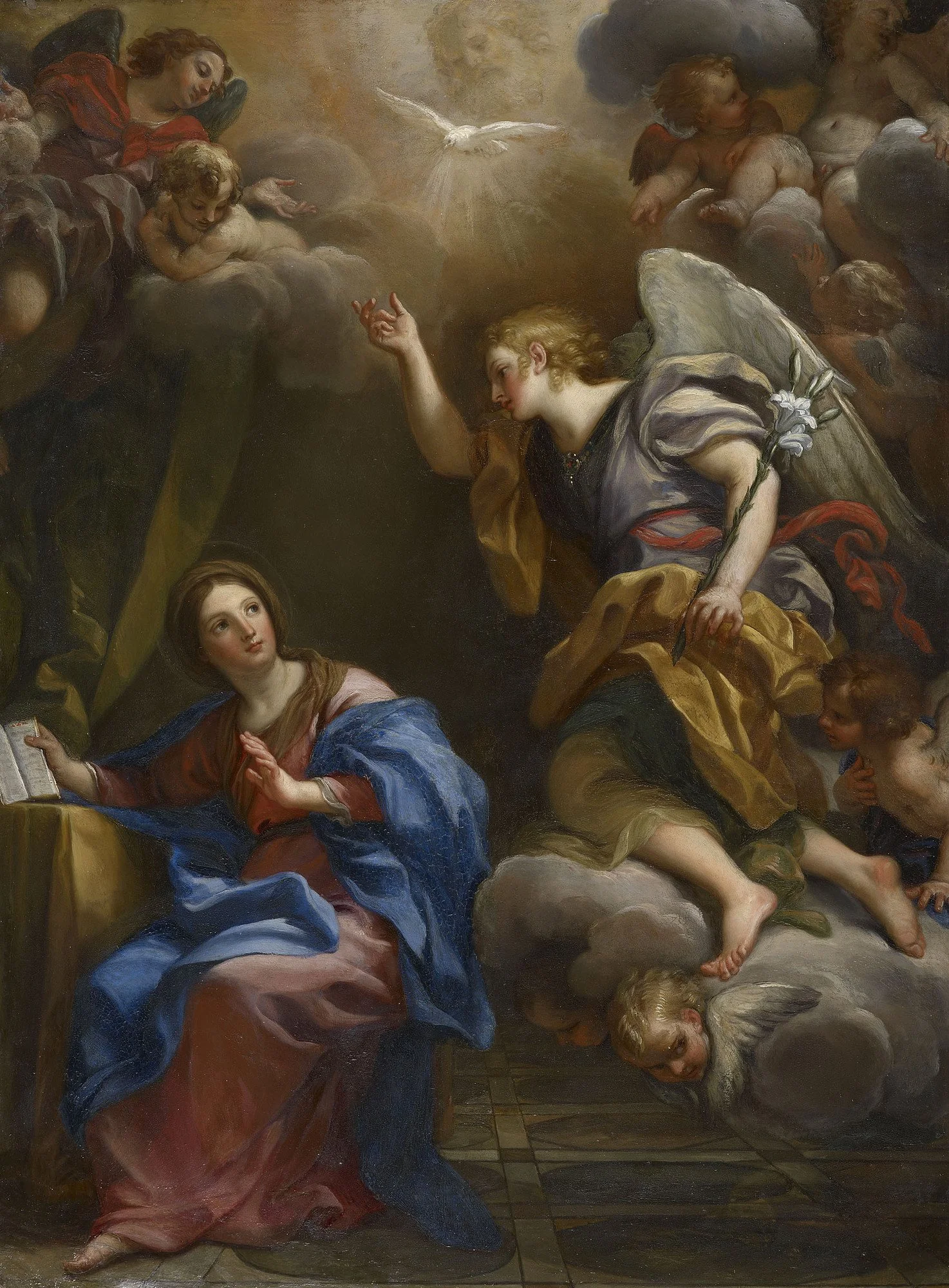
An organ recital in progress: part 111
Dear SMM Community,
The next part of my online organ recital is here, and I hope that you enjoy it. I offer up these musical meditations as part of our parish efforts to find ways to keep you connected at this time. Recorded on my house organ, the instrument is a musical facsimile of the great 'Father' Willis organ at Salisbury Cathedral.
Today, I present Johann Sebastian Bach's Meine Seele erhebt den Herren.
Johann Sebastian Bach’s (1685-1750) chorale Meine Seele erhebt den Herren BWV 648 is one of the six Schübler chorales. Dating from around 1748, the title of the collection comes from the engraver and publisher named on the title page, Johann Georg Schübler.
With best wishes,
Andrew Adair
Director of Music

Meditation - Advent II
One of the things one can say Advent is "about" is the whole shape of salvation history, an hourglass shape converging on a single point and then spreading out.
Salvation history begins before Abraham. (If you take Scotus seriously, that the universe was created so that God might become incarnate, it started before humanity.) In Genesis, it begins with the Protevangelium ("And I will put enmity between thee and the woman, and between thy seed and her seed; it shall bruise thy head, and thou shalt bruise his heel") and the typology of Abel's blood; it continues with the covenant with Noah. Outside the Bible, God has to nudge a lot of human prehistory to bring into being the context allowing the stories of the patriarchs let alone the establishment of Israel.
The Abrahamic covenant starts to narrow down to a people, or set of peoples, at the core, although still with reference to the whole earth.
With the Exodus narrative and the definition of the twelve tribes of Israel, it narrows again, though at the same time events require more broad and indirect action by God. Things had to come together just so for Israel and Judah to have space to exist, at the balance point between the Mesopotamian and Egyptian empires, which in other times had dominated the space which would house Israel.
It narrows again to David, and the promise that echoes through the Psalms: "The Lord hath made a faithful oath unto David, and he shall not shrink from it: Of the fruit of thy body shall I set upon thy seat"; "The Lord said unto my Lord: Sit thou on my right hand, untill I make thine enemies thy footstool".
When Judah falls, the future is carried by a relatively small set of exiles; only at that point does the way in which salvation history is told really begin to be pinned down; the Torah and the Duteronomic History and the rest of the Tanakh start to get their shape at that time.
After the return, several parallel and separate developments provide a context for the future: the forms of apocalyptic, and the broad (though distant) development of philosophy and thought generally in the pagan world known as the Preparatio Evangelica.
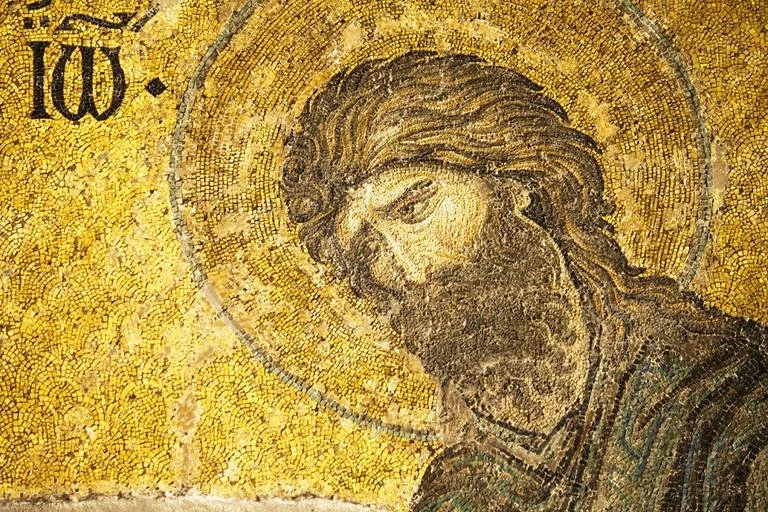
So we come, in the end, from all of humanity, to Abraham's offspring, to Israel, to David, to the Exilic remnant and finally to two hinge points: one young woman, prepared by God but in full free will, making a choice to bear the Son of God, and, a little later, a hill outside the Holy City where the salvation of the world was accomplished.
(From which point it spreads out again, from Jerusalem to Asia Minor, to Rome, thence to the whole Mediterranean world and (more slowly) to the hinterlands beyond.)
To meditate on: two responsories from Advent Vespers:
R. Behold, the days come, saith the Lord, that I will raise unto David a righteous branch, and a king shall reign and prosper, and shall execute judgment and justice in the earth. And this is the name whereby He shall be called, The Lord our Righteousness. V. In His days Judah shall be saved, and Israel shall dwell safely. R. And this is the name whereby He shall be called. V. Glory be... R. The Lord our Righteousness.
V. The Lord shall teach us his ways, and we will walk in his paths. R. For the law shall go forth of Zion, and the word of the Lord from Jerusalem. V. Come, and let us go up to the mountains of the Lord, and to the house of the God of Jacob. R. For the law shall go forth of Zion, and the word of the Lord from Jerusalem. V. Glory be... R. For the law shall go forth of Zion, and the word of the Lord from Jerusalem.
James Burbidge
Willan 100 recital
Dear SMM Community,
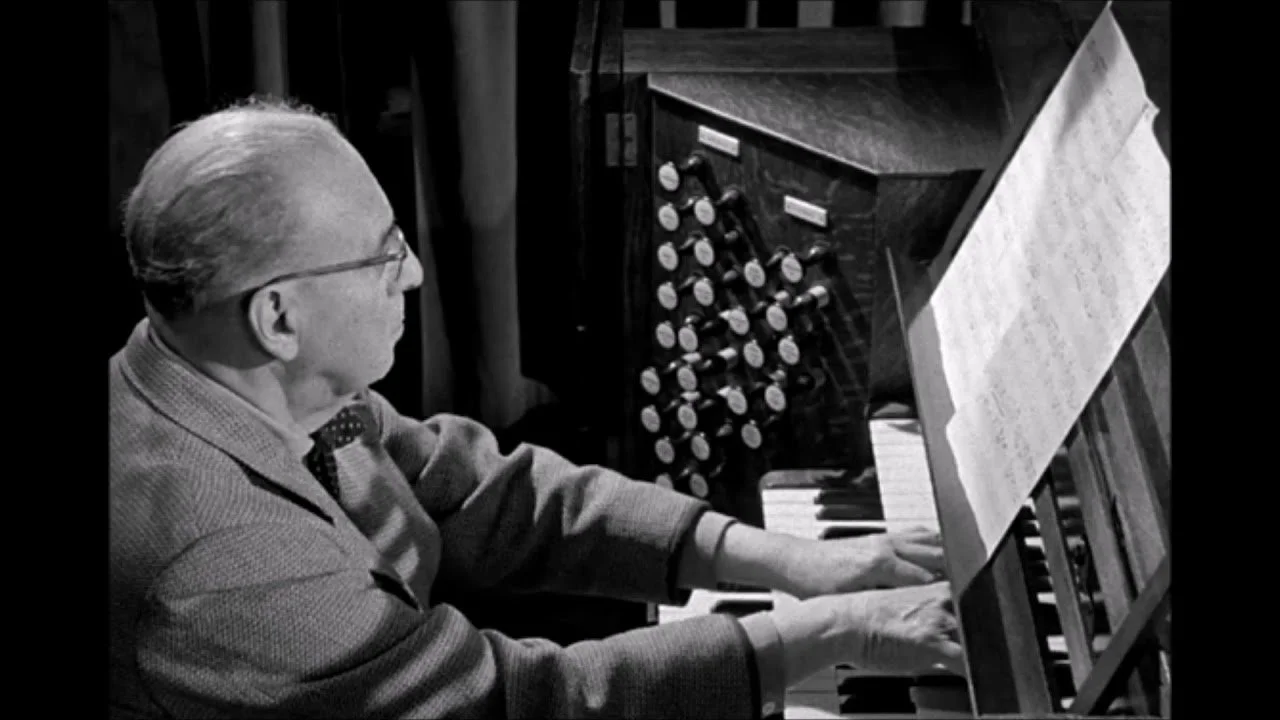
The 110th part of my online organ recital is here, and this is a particularly special instalment: a recital celebrating the centenary of Healey Willan's arrival at the Church of St. Mary Magdalene, featuring Willan's Five preludes on plainchant melodies, played on the Healey Willan Memorial Organ at SMM.
Healey Willan arrived at SMM 100 years ago on December 4. We will be celebrating Willan's work with a year of events, starting with this recital.
Claimed by some as Healey Willan’s (1880-1968) greatest set of hymn preludes, his Five preludes on plainchant melodies were written in 1950 after commission from Oxford University Press, and published in 1951. Dedicated to Charles Peaker, he also performed the premiere of the set on 14 October 1950 in honour of Willan’s 70th birthday. Gregorian chant was an important part of Willan’s life, and his love of it is clearly evident in his treatment of the various melodies—from the dulcet tones of Ecce jam noctis to the thundering final strains of Urbs Hierusalem beata.
With best wishes,
Andrew Adair
Director of Music

Meditation - Advent 1
Advent I
Advent is the season of salvation history. Christianity, or at least Catholic Christianity, has at its centre the incarnate, the concrete, the historical. Christ came at a particular point in time, "in the sixth age of the world", and the life of the Church after him has been tied up with the day-to-day and year-to-year flow of human action and reaction ever since.
We might want to think a bit about the history of Advent itself.
Advent is a relative latecomer. Easter and Pentecost date to the first century. Christmas emerges, maybe, out of the Third Century but really comes blinking into the light in Constantine's day. Lent develops over the Second and Third Centuries.
The earliest reference to a fast before Christmas is in the late Fourth Century, and it took some time after that to become general. Advent seems to have developed in the West out of the Ember Days before Christmas (which have their own convoluted history).
And make no mistake, Advent was a fast. Some kept a full forty days in parallel with Lent ("St. Martin's Lent"); the French réveillon after Midnight Mass is not only a meal after the conclusion of the strict fast of the Christmas vigil, but a feast ending a general fasting season. The entwining of fasting and self-denial with the joyful expectation of the coming of God goes back a very long way in the Church, as it is seen as the way of turning to God and away from the world; the Advent fast was finally abolished only in the early 20th Century.
The expectation of our Lord's first and second coming blended together early on: the traditional advent collects of the missal play on the theme of God raising up ("Excita" is the verb) his power, or our wills. (Advent at one time in some western liturgies lasted six weeks, whence comes the preservation of one such collect as the Sunday Next Before Advent.) The Anglican rite retained only the first ("Stir up Sunday") and the old collect for Advent 4, poised between the incarnation and the parousia.
Advent became the season of the four last things: death, judgement, heaven, and hell, at least as far back as Dante's time. It is surely a season of expectation, but its expectation drives towards the eschatological. Only in its final octave does it turn to recalling the events leading up to Christ's birth.
The Anglican Reformation made few changes - Advent remained purple, subdued, eschatological - though it did considerable violence to the sequence of collects, retaining only one. In return, we got one of the best of the Cranmerian collects, which became the refrain of the season. (We also got the rather dull collect for Holy Scriptures Sunday, replacing one beginning "Stir up our hearts, O Lord, to make ready the ways of thy only-begotten". You win some, you lose some.)
"Almighty God, give us grace that we may cast away the works of darkness, and put upon us the armor of light, now in the time of this mortal life in which thy Son Jesus Christcame to visit us in great humility; that in the last day, when he shall come again in his glorious majesty to judge both the quick and the dead, we may rise to the life immortal; through him who liveth and reigneth with thee and the Holy Ghost, one God, now and for ever. "
We might want to put that side by side with the ancient collect for the Sunday, so that nothing may be lost:
"Raise up, we beseech thee, O Lord, thy power, and come: that we may be made worthy of thy protection from the pressing perils of our sins, and may be saved by thy deliverance, who livest and reignest..."
James Burbidge

Advent Prayer Calendar
Join us on YouTube for our Advent Prayer Calendar, which offers a daily prayer or meditation to inspire you in this holy season.
Each day, beginning on Sunday, 28 November (Advent 1) a new prayer or meditation will appear in our Advent Prayer Calendar playlist. Each prayer is read by a member of our community, and many of the images are provided by them as well.
We hope you find comfort, inspiration, and joy, as you open each day with new prayer.