
Live Streamed Services
Archive
- December 2025
- November 2025
- October 2025
- September 2025
- August 2025
- July 2025
- June 2025
- May 2025
- April 2025
- March 2025
- February 2025
- January 2025
- December 2024
- November 2024
- October 2024
- September 2024
- August 2024
- July 2024
- June 2024
- May 2024
- April 2024
- March 2024
- February 2024
- January 2024
- December 2023
- November 2023
- October 2023
- September 2023
- August 2023
- July 2023
- June 2023
- May 2023
- April 2023
- March 2023
- February 2023
- January 2023
- December 2022
- November 2022
- October 2022
- September 2022
- August 2022
- July 2022
- June 2022
- May 2022
- April 2022
- March 2022
- February 2022
- January 2022
- December 2021
- November 2021
- October 2021
- September 2021
- August 2021
- July 2021
- June 2021
- May 2021
- April 2021
- March 2021
- February 2021
- January 2021
- December 2020
- November 2020
- October 2020
- September 2020
- August 2020
- July 2020
- June 2020
- May 2020
- April 2020
- March 2020
- January 2020
- December 2019
- November 2019
- September 2019
- August 2019
- July 2019
- May 2019
- April 2019
- March 2019
- February 2019
- January 2019
- December 2018
- November 2018
- October 2018
- September 2018
- August 2018
- July 2018
- June 2018
- May 2018
- April 2018
- March 2018
- February 2018
- January 2018
- December 2017
- November 2017

An organ recital in progress: part 58
Dear SMM Community,
The next part of my online organ recital is here, and I hope that you enjoy it. I offer up these musical meditations as part of our parish efforts to find ways to keep you connected at this time. Recorded on my house organ, the instrument is a musical facsimile of the great 'Father' Willis organ at Salisbury Cathedral.
Today, I present Jehan Alain's Choral phrygien.
Jehan Alain (1911-1940) was set to become one of the great French organist-composers of the twentieth century when his life was tragically lost at the outset of World War II. His Choral phrygien is named after the mode in which it is set.
With best wishes,
Andrew Adair
Director of Music
Archbishop Johnson's Homily for the Twenty-Third Sunday after Pentecost
The Lambeth Conference in 2008 brought together bishops from across the world to meet in Canterbury for this once-in-a-decade convocation. Some 750 bishops arrived and along with their spouses, presenters, lobbyists and media, more than 2000 people gathered over the three weeks. It was tense. Some bishops boycotted the Lambeth Conference entirely. The 1998 conference had left a legacy of anger and recrimination, hurt feelings and defiance, much of it arising from conflict focusing on LGBTQ+ issues. It appeared in 1998 and the decade that followed that the Anglican Communion would split apart – some feeling shoved out, some leaving in high dudgeon, some broken, some confused and many sad. Sexuality was the presenting issue but it was not the only cause – changing social norms, power dynamics, colonial legacies, communication technology, demographics, inter-religious and secular political tensions all had parts to play. I start with this because it has so many echoes of the situations that we find ourselves in today in our society and in our parish.
But something happened at the 2008 Conference that began to make a difference: People talked. An African process called Indaba, something akin to some Indigenous sharing circles, shaped the conversations. Prepared speeches, up/down votes on motions, and polarised debates gave way to conversations that began with what we had in common in our ministries as followers of Jesus and our mission to live and proclaim the Kingdom of God. It was far from perfect. It did not instantly heal the divisions and the wounds. But it made a fresh start. It is not the only process possible. It showed that such processes can make a difference.
I was privileged to be one of 15 facilitators at the Conference, and it changed my life. And it is not too strong to say that it was a significant factor in changing discourse and actions in the church in this Diocese.
The following year, with the assistance of a priest then on my staff, I gathered a group of 11 bishops from Canada and East and Southern Africa to meet to continue to listen to one another. In a neutral setting, we began to explore our differences in experience and understanding out of our shared identity as baptised Christians, called by God into a common ministry but placed in different contexts and cultures. At first we were like cats – circling warily, occasionally hissing but there came a moment of shared recognition that we were part of a family that was bigger than us, that in our own ways we were struggling to be faithful to the gospel of Jesus Christ as we exercised our leadership as bishops in the church of God.
In the decade that followed, those 11 grew to over 60. At each meeting, new people came, others moved on, but the spirit of communion that we share because God has imprinted on each of us God’s own image – and the command that Jesus gave us to love one another as he loves us – a command not a suggestion – has deepened our commitment to each other in spite of our continuing differences. It has been an experience of grace. The diversity of opinion has not been homogenised – in fact we can be really frank with one another because we know, as one bishop put it, “our names can be safe in each other’s mouth.” It has been hard and costly work to come to this place. It has been met with opposition and derision in some quarters but it has made a difference in the life of our Anglican Communion. It is a sign of hope. It is a profoundly real and personal experience of the Church catholic – belonging together, not of our volition but by God’s will and choice, across space and time.
Recently that shifted to a new level. We have been calling each other to listen and support one another as we face the global pandemic of COVID-19. We called not as interested colleagues but as loving friends. We could not have done this – we wouldn’t even have known each other – before the dialogue brought us together. As much as COVID has affected us in so many significant ways, there are places where the impact is utterly devastating of whole communities. We could hold each other in prayer and love as well as offering practical support. We are a Communion – a community of faith – the Church of the living God.
“It is all just talk!” some say. “Talk is cheap.” No it is not!
In the beginning, the book of Genesis reminds us, God speaks the universe into being. It is a costly speech. God calls humanity into conversation with God, and when Adam and Eve in the creation account go into hiding and refuse to answer, God seeks them out. In one of our Eucharistic prayers, we pray:
“We give thanks to you, Lord our God, for the goodness and love you have made known to us
-in creation
- in calling Israel to be your people
- In your Word spoken through the prophets
- and above all in the Word made flesh, Jesus your Son.”
(Eucharistic Prayer 3, p. 198, Book of Alternative Services)
Words have power – to hurt, condemn, destroy – to comfort, heal, create.
The eminent biblical scholar, Walter Breuggemann, notes that God is willing to employ all forms of speech except monologue. There is always a conversation.
If you look at the root of “conversation”, it is “con” (with) – “versa” (toward) – “tion” (the act of), the act of turning toward another. Conversation is both speaking and listening; it is not monologue. It is a sharing of heart and mind, with the goal of deeper understanding. In the Christian context, there is always a third party to the conversation. the Holy Spirit. The Spirit that draws us into the love of the Father for the Son and the Son for the Father, the Spirit who unites us in that loving communion so profound that it becomes a safe place to share not only pleasantries but allows us to engage constructively in points of real disagreement because we can confidently acknowledge the other as a bearer of the image of God. Conversation leads to communion leads to community. We are called by Christ into his beloved community.
Chief Rabbi Lord Jonathan Sacks, who died suddenly just last week, wrote that “we have been commanded to worship God alone. Each of us has been created in the image of God and are bearers of God’s image. If I cannot discern the image of God in the stranger who does not look or think or act like I do, than I have made God into my image and I am worshipping an idol.”
Last Thursday at the Larkin-Stuart Lecture at Trinity College, the Presiding Bishop of the Episcopal Church, Michael Curry, quoted Dr. Martin Luther King. King was at a point of his deepening despair about the effectiveness of his work on behalf not only of his people but the soul of his country to which he devoted his life. In the midst of that despair, a prophetic despair, he held on to this:
“We will either live together as brother and sisters (Siblings) or we will perish together as fools – either community or chaos – the choice is ours.”
Community or chaos. I urge you to choose community.
[Later in Thursday’s lecture, in response to a question about his own response to the politics of polarity, Presiding Bishop Curry used a remarkable image. He said we must learn the art of kneeling and standing at the same time.]
[Kneeling in the presence of the “Other” – the stranger, the enemy, even the friend, in recognition that they are a child of God, one who bears the image of God, one who is as beloved and cherish by God as I am.]
[And standing, face to face, engaging the other with integrity and conviction about what I believe is important and crucial and right.]
[Either stance alone is incomplete – the one can become subservience; the other can lead to violence. As a Christian, truth can only be spoken from a place of love. “Righteousness and truth have met together; Righteousness and peace have kissed each other.” Psalm 85.]
Most of us here at St Mary Magdalene’s have been in turmoil in the last six weeks – and for some it has been for a lot longer than that. Confusion, anger, blame, betrayal, sadness, passion and compassion have all swirled through us. Community has been threatened. It is a very trying time, indeed.
I have had the privilege of serving here for just six week. I see what a remarkable place this community is. I have had over 70 deep, personal conversations with individuals and some groups here. Some have been extraordinarily profound. You are an astonishingly gifted people – yes, sometimes eccentric, but wonderfully diverse in intellect and skill, in faith and in action, in experience and insight, in stability and innovation. This is not a patronising statement. I have had oversight of hundreds of parishes and travelled to most parts of the world and seen the church around the globe. I can tell you that SMM has a unique place in that wider church. I see great capacity for you to thrive, and the quality and extent of the gifts you have to offer to your local neighbourhood and to the neighbour on the other side of the world.
But I am concerned about two things I also see that I think need to be addressed.
I am concerned with scape-goating that is occurring – the blame placed on a few that assigns responsibility for what has happened on “them”, that takes the burden off the whole community, on ‘us’ ,to do the hard work that is required to face our community’s painful history and our own need for wholeness and healing.
That work will require us to take risks, to speak to people we would prefer to avoid, to listen deeply to one another’s hurt, to take courageous steps to trust when it hasn’t been earned, to be vulnerable when it is a lot safer to cocoon, to act in faith even when doubt circles like the angel of darkness. You need to intentionally chose community over chaos and to engage in the hard work of facilitated conversation that will undergird community and lead to communion. Opportunity for this will be provided over the next weeks and months but I would urge you to engage one-to-one as well. You care for each other but most of you do not know each other very well beyond your own circle of friends. It will not be easy but to take the easy route is to avoid the change that will be transformative and life giving.
Secondly, I am concerned that the focus of attention and an enormous amount of energy has been so strongly focused, either pro or con, on leaders (whether lay or ordained, priest or bishop) that we are in grave danger of losing our centre in Jesus. It is Jesus whom we follow. It is Jesus who has invited us here and welcomes us. It is Jesus to calls us sisters and brothers and siblings. It is Jesus who calls us to repent and forgives us. It is Jesus who heals us. It is Jesus who gives us life. It is Jesus who is our Saviour, Redeemer and Lord. No one else!
Someone asked, “Why should I still come to this Church?” My response is brief but I believe it to the core of my being: “because Jesus is still here!”
This parish is not going to fall apart or fail. At its core is a resilient tradition of prayer and action, of glorious worship of God in word and sacrament, of devoted engagement and outreach into the community around and the world beyond, of formation in faith and practice that informs the lives of real people in a real world. The incarnate love of God has been at the very centre of the most authentic expression of SMM’s life for one and a quarter centuries, and it still is. God has not left.
When I asked a parishioner how she came here and why she stayed, she said, “I came in and I realised that people were not just going through the motions. Something important is going on here. SMM is making a difference in people’s lives!” And sometimes – perhaps often – we fail at that – sometimes badly, and we need to repent and try again. You have been given many gifts. The greatest of them is each other. Our hope is not that we are perfect but that God continues to work in and through us, bringing unity out of estrangement, forgiveness out of failure, hope out of despair, life out of death. And through it all the grace of God’s love shines out from the cracks in the broken vessels of clay we are. And we need each and all of those clay vessels in all their brokenness to be able to be faithful witness to God’s redemptive power.
I have had the honour of witnessing that in the last 6 weeks. Today is my last Sunday here. You are moving into a new chapter of your life together. Fr Harrison has submitted his resignation as rector. You continue to have a very gifted associate priest in Mtr Johanna, and a new interim priest in charge, Fr Andrew MacDonald, whom I highly regard, to assist you. I pray for you. This has been a challenging ministry for me, yes, I have lost much sleep, enriched my dentist, offered many earnest prayers, but it has also been a real blessing to come to know you better. I promise that I will continue to keep you in my prayers.
Thank you and thanks be to God.
Amen.
Homily November 14/15, 2020
Church of St Mary Magdalene, Toronto
The Most Rev’d Colin R. Johnson

Pentecost XXIV - 15 November 2020
We celebrate the Twenty-Fourth Sunday of Pentecost with a Sung Mass (traditional language). Archbishop Colin Johnson presides and preaches.
(Apologies for the slightly uneven sound - there was a lot of noise going on outside, and it affected our sound levels. You made need to turn up the volume on your computer a little.)
You find the video HERE. (The link will go active Sunday morning.)
If you would like to participate, you can find the leaflet HERE.
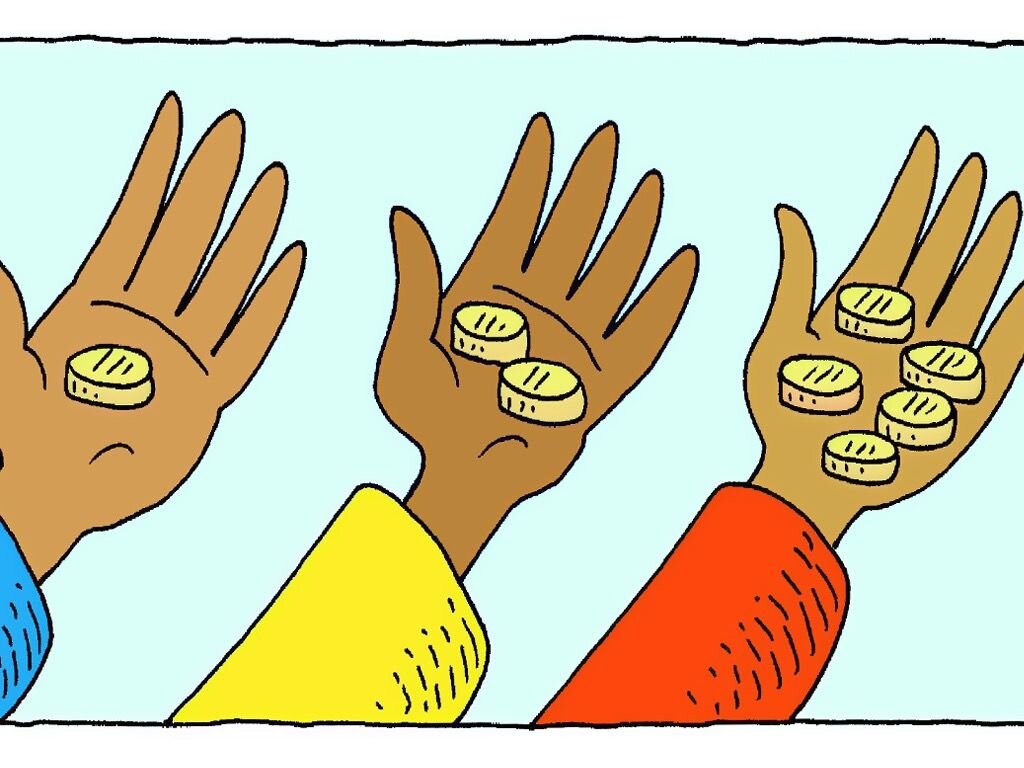
The Parable of the Talents for Children & Youth
Mother Johanna and some very excitable wooden figurines tell Jesus's story about using or hiding our gifts.
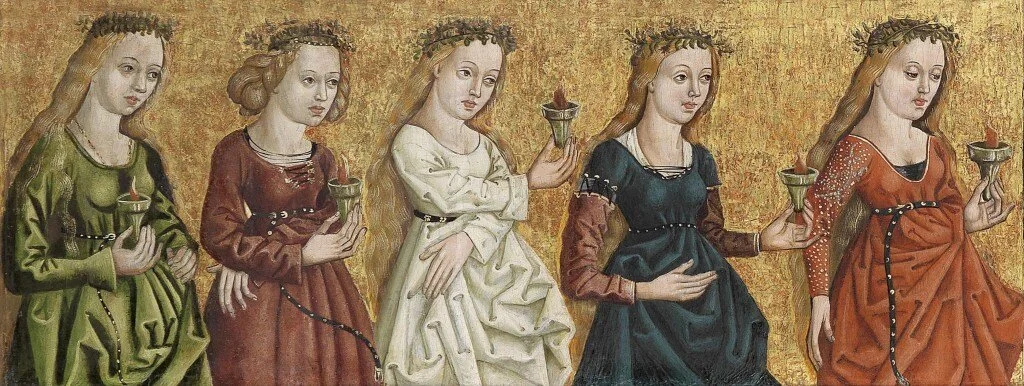
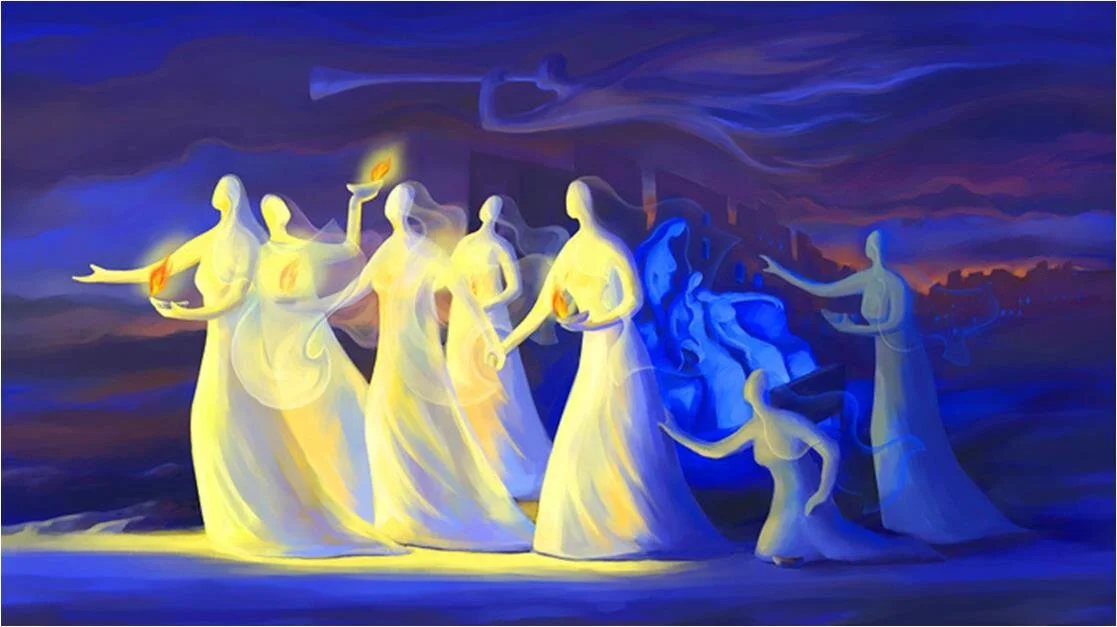
The Wise & Foolish Bridesmaids (for Children & Youth)
Mother Johanna rushes to get ready for the bus, and tells us Jesus' story about what it means to be ready for the Kingdom of God.